
What Is GHK-Cu?
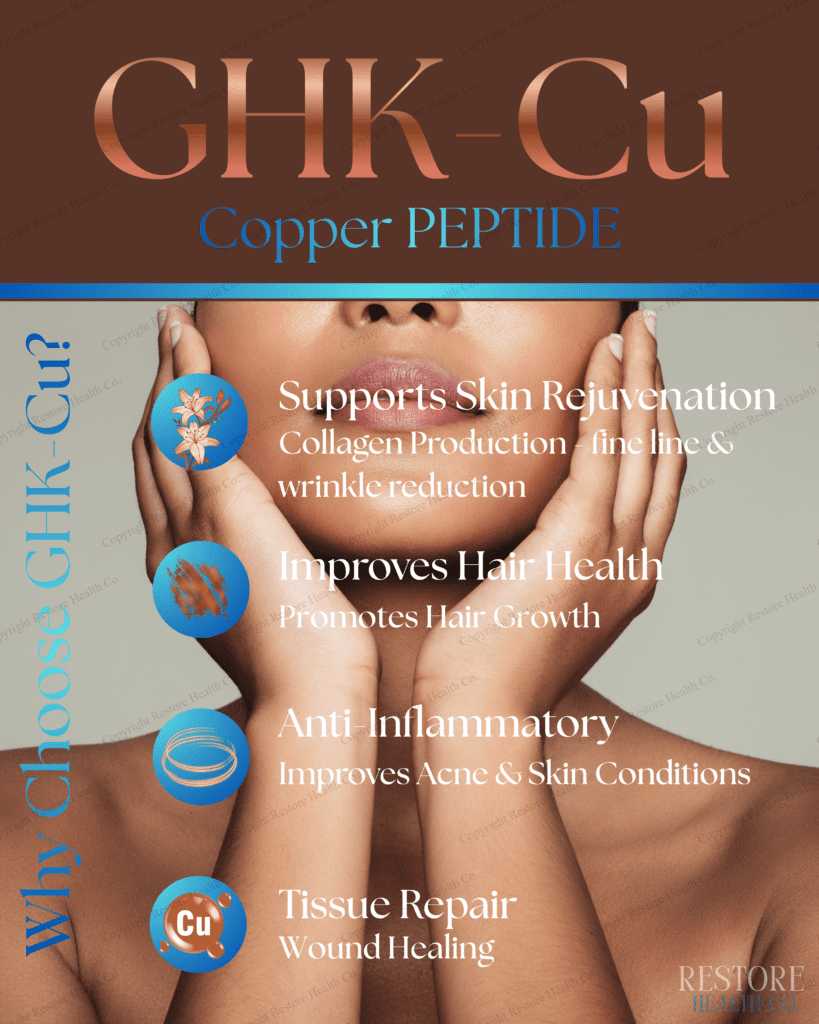
GHK-Cu (Glycyl-L-Histidyl-L-Lysine Copper) is a naturally occurring copper peptide found in human plasma, saliva, and urine. First discovered in the 1970s, this small peptide has attracted significant scientific interest due to its potential role in tissue repair, skin health, hair growth, and cellular regeneration.
As we age, natural levels of GHK-Cu decline. Researchers believe this decrease may contribute to some of the visible and physiological signs of aging, making GHK-Cu an exciting area of study in longevity and regenerative medicine.
How Does GHK-Cu Work?
GHK-Cu functions as a signaling peptide, meaning it helps communicate important biological messages between cells. One of its primary roles is binding copper ions and delivering them where they are needed most throughout the body.
Research suggests GHK-Cu may:
- Support collagen and elastin production
- Promote tissue repair and wound healing
- Help regulate inflammation
- Support antioxidant activity
- Encourage healthy hair follicle function
- Assist with skin rejuvenation
- Influence gene expression associated with cellular repair
This broad range of biological activity has made GHK-Cu one of the most widely studied peptides in regenerative medicine research.
GHK-Cu and Skin Health
One of the most popular applications of GHK-Cu is skin rejuvenation.
Collagen and elastin are essential proteins that provide firmness, elasticity, and structure to the skin. As we age, production of these proteins naturally declines, leading to wrinkles, thinning skin, and loss of elasticity.
Studies suggest GHK-Cu may help:
- Improve skin firmness and elasticity
- Reduce the appearance of fine lines and wrinkles
- Support healthy collagen production
- Improve skin texture and tone
- Promote a more youthful appearance
Because of these potential benefits, GHK-Cu is frequently included in advanced skincare formulations and regenerative aesthetic protocols.
Can GHK-Cu Support Hair Growth?
Hair health is another area where GHK-Cu has gained attention.
Research indicates that GHK-Cu may help support the health of hair follicles and improve the environment necessary for healthy hair growth. Some studies suggest it may:
- Support hair follicle function
- Improve scalp health
- Promote thicker-looking hair
- Help extend the hair growth cycle
While more research is ongoing, GHK-Cu continues to be studied as a promising option for individuals seeking comprehensive hair restoration strategies.
GHK-Cu and Recovery
Athletes and active individuals are increasingly interested in GHK-Cu because of its potential role in tissue repair and recovery.
Research has demonstrated that GHK-Cu may help support:
- Healthy connective tissue function
- Muscle recovery
- Tissue regeneration
- Recovery from minor injuries
- Overall cellular repair processes
These properties have made GHK-Cu a topic of growing interest within the fields of sports performance and regenerative wellness.
GHK-Cu and Healthy Aging
Aging is influenced by numerous biological processes, including oxidative stress, inflammation, and declining cellular repair mechanisms.
Scientists have found that GHK-Cu may influence thousands of genes involved in repair, regeneration, and healthy cellular function. While research is ongoing, these findings suggest GHK-Cu could play an important role in future healthy aging and longevity strategies.
Potential areas of interest include:
- Cellular regeneration
- Healthy inflammatory response
- Antioxidant support
- Tissue maintenance
- Skin and hair vitality
How Is GHK-Cu Administered?
Depending on the intended use, GHK-Cu may be available in several forms, including:
- Topical creams and serums
- Injectable formulations
- Hair and scalp treatments
- Regenerative wellness protocols
The most appropriate option depends on individual goals, health history, and guidance from a qualified healthcare provider.
Is GHK-Cu Safe?
Current research suggests GHK-Cu is generally well tolerated when used appropriately. However, as with any peptide or wellness therapy, treatment should be guided by a knowledgeable healthcare professional.
Individuals should always discuss their medical history, medications, and wellness goals with their provider before beginning any new treatment protocol.
The Future of GHK-Cu
GHK-Cu represents one of the most exciting developments in peptide science. Its potential effects on skin health, hair restoration, tissue repair, and healthy aging continue to drive interest among researchers and healthcare professionals alike.
While ongoing studies will continue to expand our understanding, GHK-Cu remains a promising tool in the growing field of regenerative and longevity medicine.
Interested in Learning More?
At Restore Health Co., we stay at the forefront of evidence-based therapies designed to help our patients look, feel, and perform their best. If you’re interested in learning whether peptide therapy may be appropriate for your wellness goals, contact our team today to schedule a consultation.
Disclaimer: This article is for educational purposes only and is not intended to diagnose, treat, cure, or prevent any disease. Individual results may vary. Always consult a qualified healthcare professional before beginning any new treatment.